The form follows
the family.
Five forms of work. Most commissions combine three or four of them, decided after we have listened, never before. There are no packages.
The images below are illustrative scenes of the work we describe.
01
The film
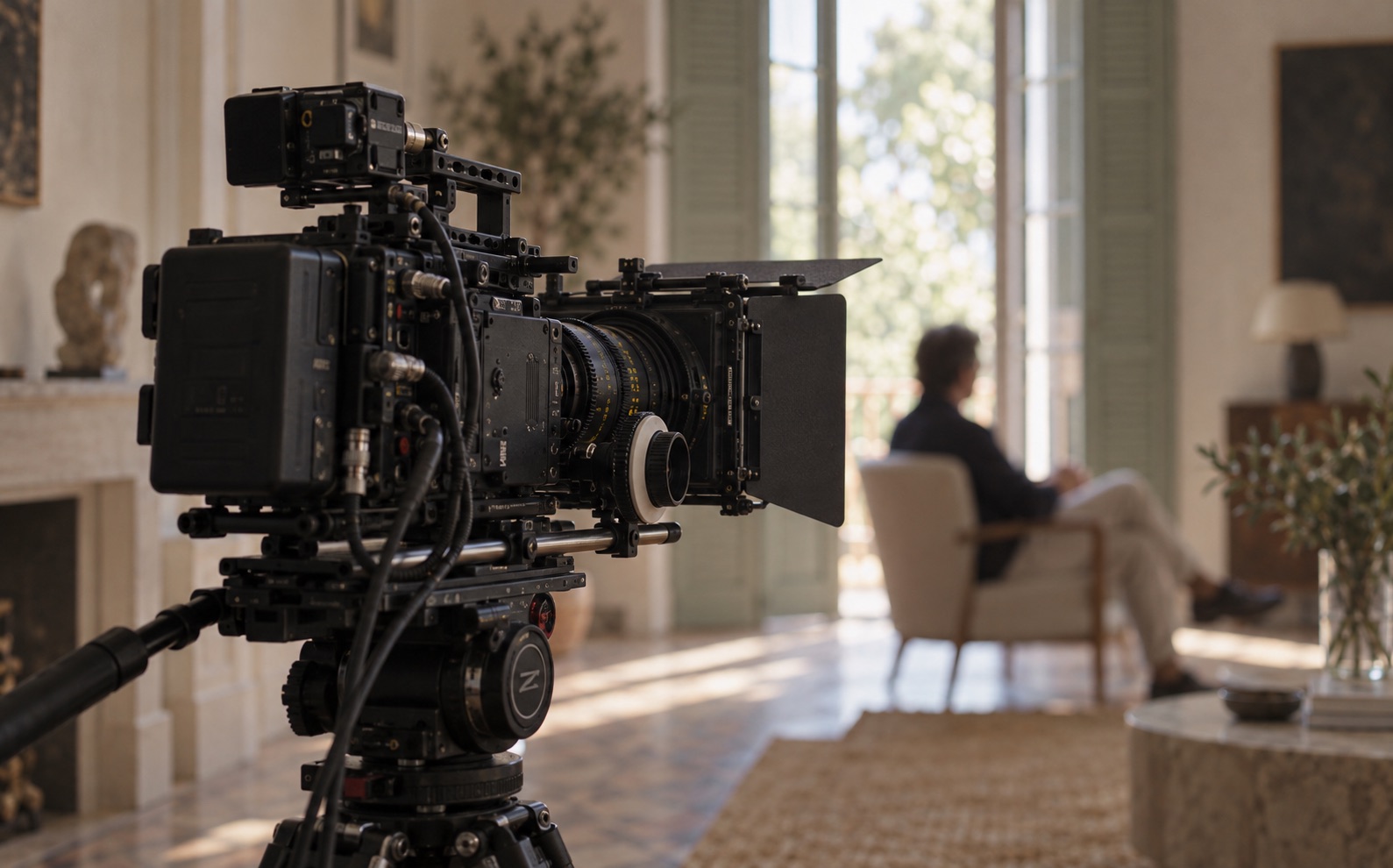
A documentary film about one person, a relationship, or a house. Between a few minutes and feature length, depending on what the material turns out to be.
What it involves
Recorded conversations, filmed in places that mean something to the person rather than against a backdrop. Existing home film and video, digitised and graded without being made to look old or made to look new. Sound recorded properly, because a voice is the thing people come back to.
What you end up holding
The finished film in a form they can actually play, now and later. The full recorded conversations, uncut, which is often the thing the grandchildren want. Subtitles in the family’s languages. A transcript.
What it does not promise
It is not a montage set to music. Music goes under a person speaking only if the family asks for it.
02
The book and the photographic edition
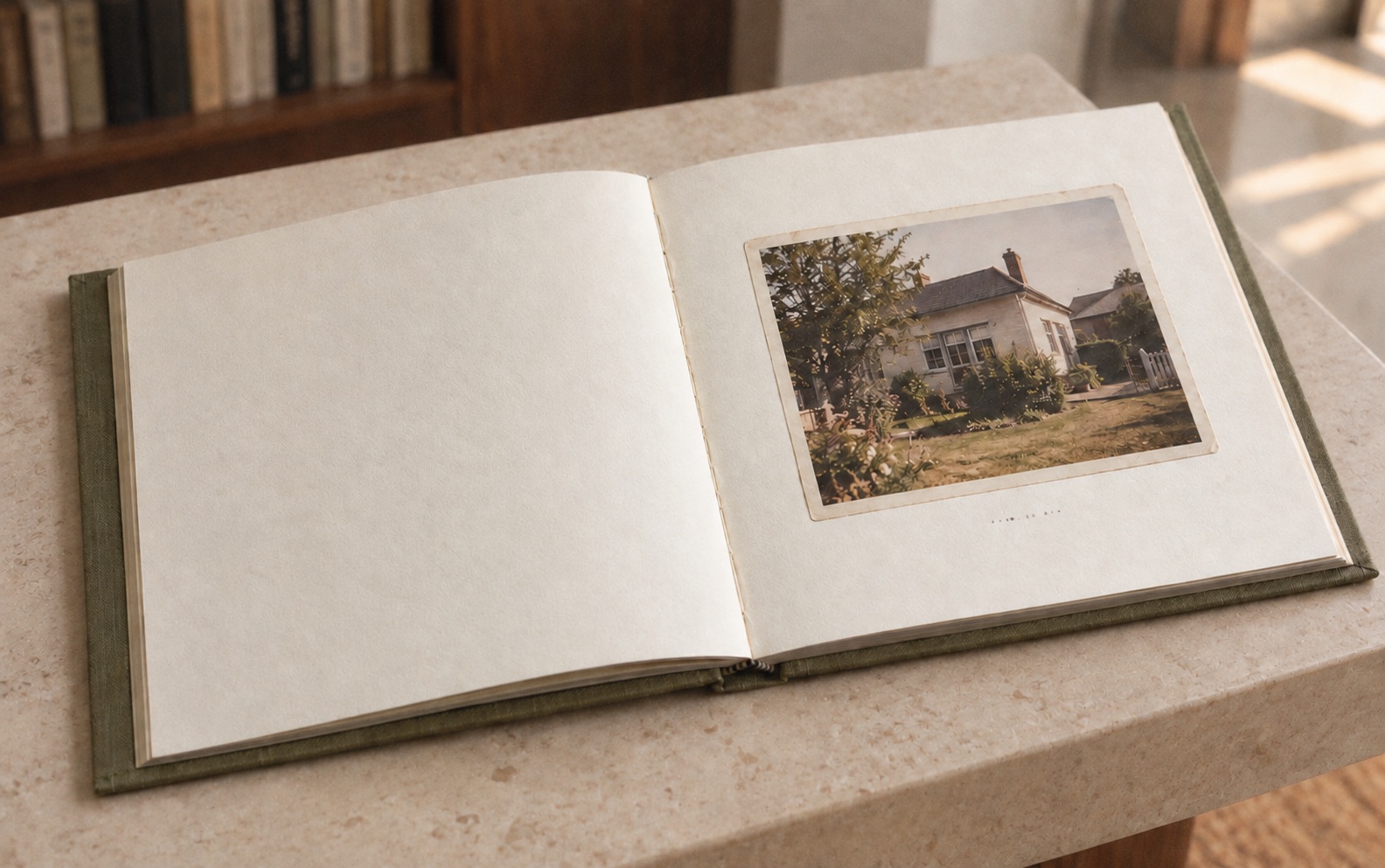
A printed book of photographs, documents and the family’s own words. Section sewn, cloth over board, made to be handled rather than displayed.
What it involves
Selecting from what exists, which is the hard part. Writing captions that say who, where, when, and what nobody knows any more. Setting the family’s account in their own sentences rather than ours. Printing originals whole, edges and damage included, at a size where you can see what they are.
What you end up holding
The book, in as many copies as they want. The files it was made from. A second copy of anything fragile.
What it does not promise
We do not retouch a face, invent a colour, or fill a missing corner. Where an image has been restored, both versions exist and the caption says so.
03
The audio work
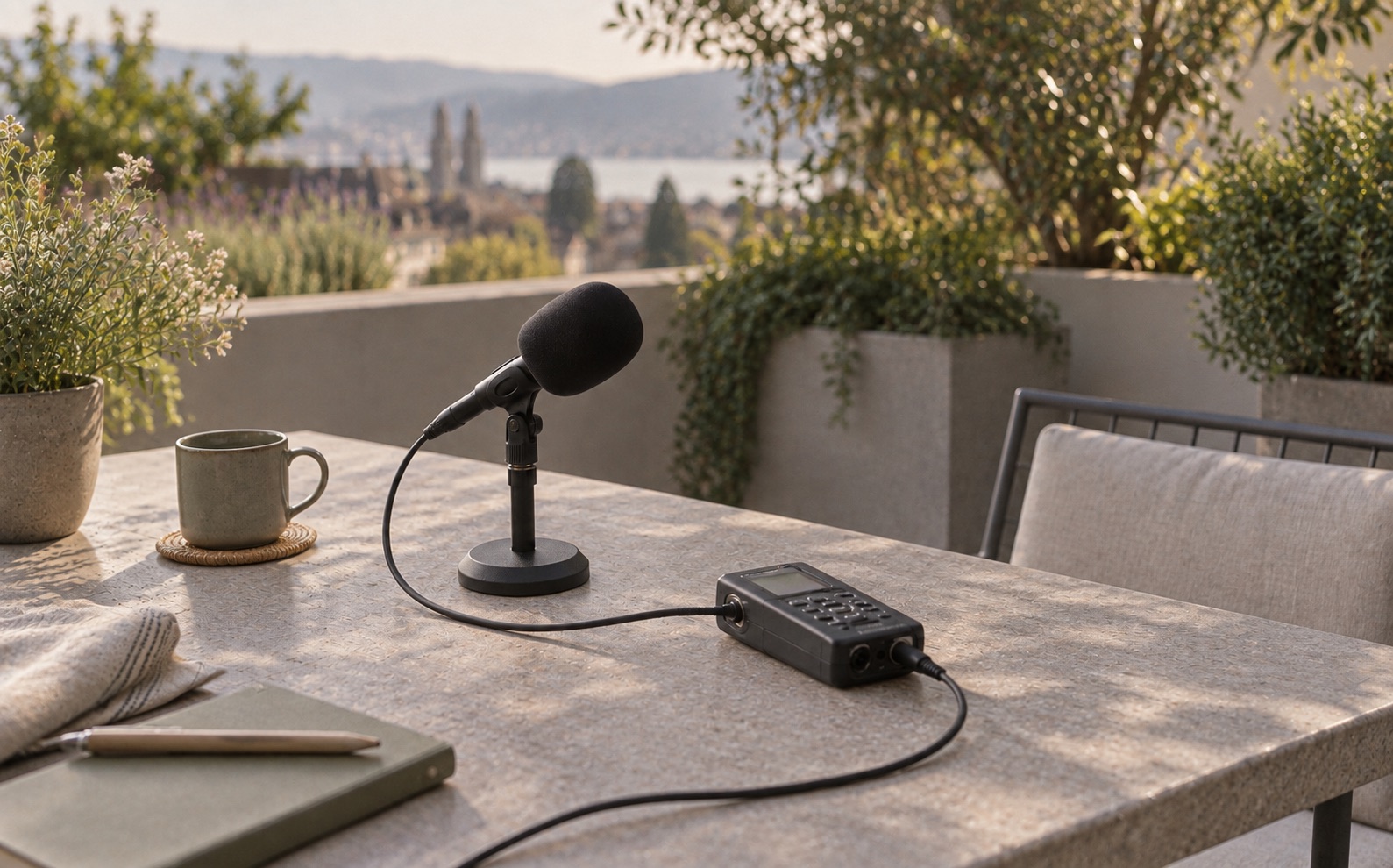
A recording, or a set of them, built for listening rather than watching. Sometimes the right answer for someone who does not want a camera in the room.
What it involves
Long conversations, recorded across several sessions. Reading aloud of letters and documents, often by a descendant. Room sound from the places the person talks about.
What you end up holding
The edited work, the full recordings, and transcripts.
What it does not promise
We do not synthesise a voice, and we do not reconstruct one that was never recorded.
04
The organised archive
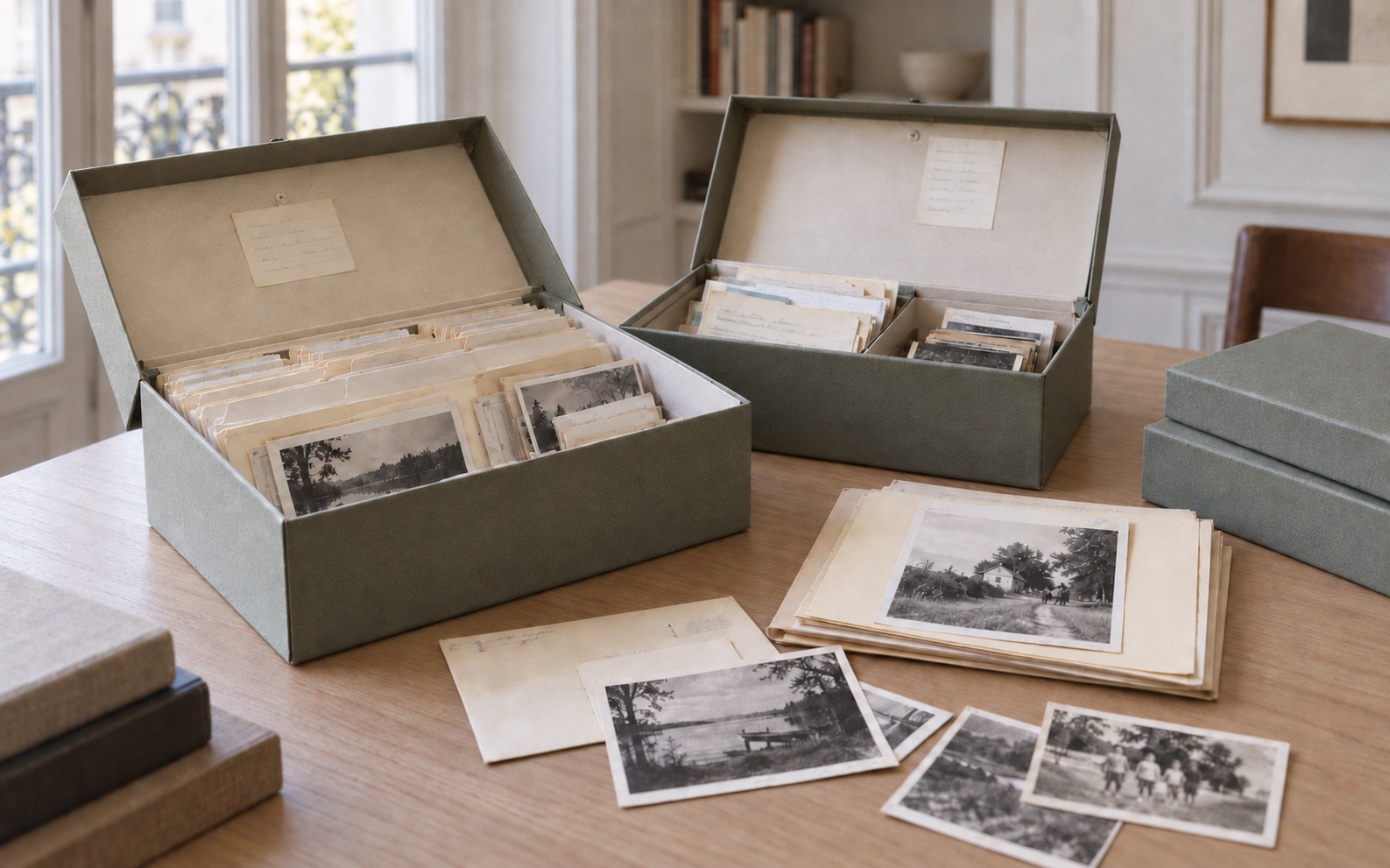
Everything the family has, identified, catalogued, digitised and put somewhere it can be found again. For many families this is the most useful thing we do and the least visible.
What it involves
Collecting what is in different houses. Handling and scanning originals and returning them. Naming people in photographs while there is still someone who can. Recording where each original physically lives. Building a catalogue a person can use without being trained, in the family’s own language.
What you end up holding
The catalogue. The digitised files in open formats. Archival boxes with a contents card in each lid. A written record of everything still unidentified, and of what was ruled out getting there.
What it does not promise
We do not name a face on a guess. Where the evidence runs out the catalogue says so, and shows what was checked.
05
Long-term care
An arrangement for the years after delivery, so that what we made stays openable.
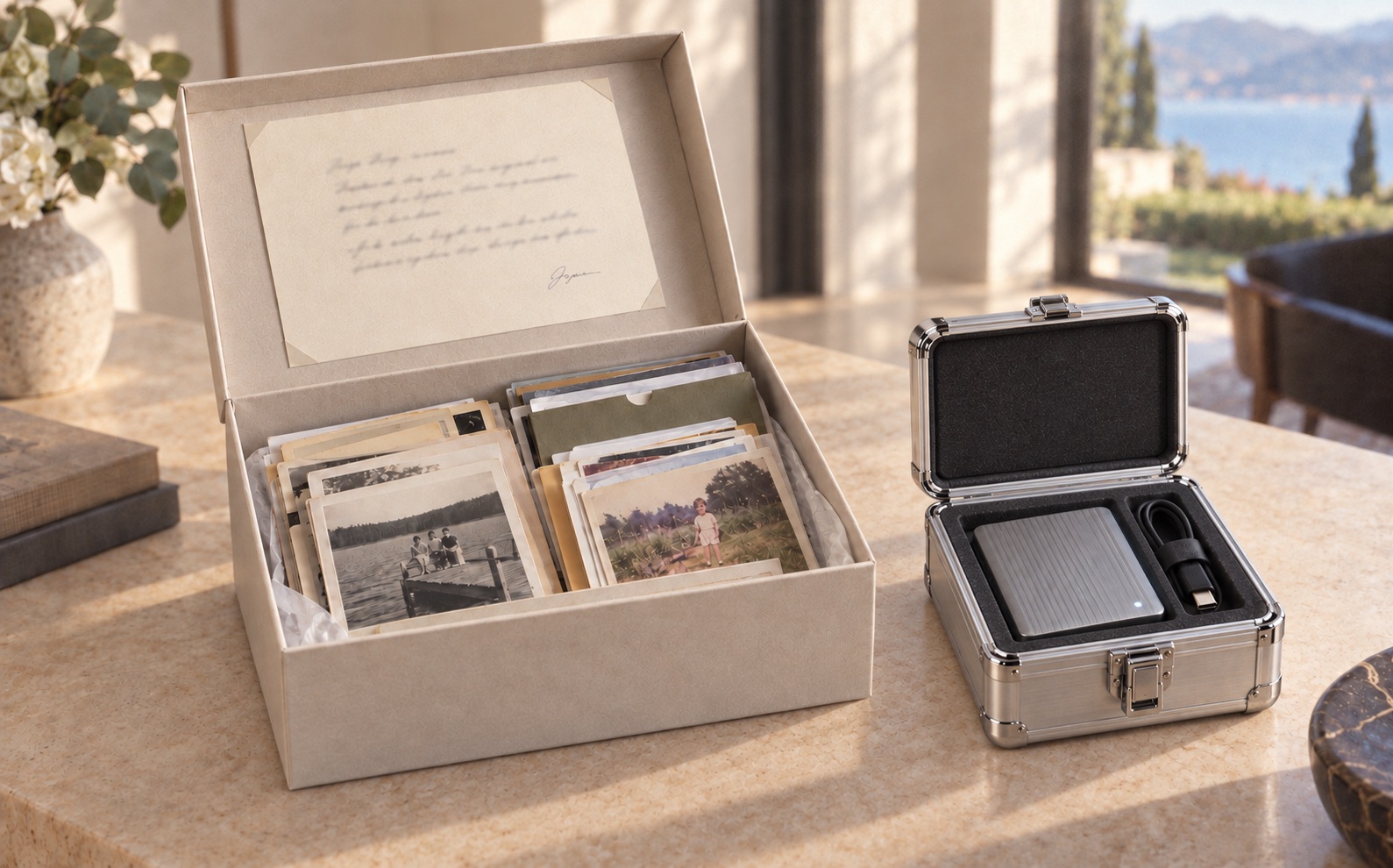
What it involves
Agreed formats. Agreed copies in agreed places. A named person on the family’s side who holds access. A review at an agreed interval, where files are checked and migrated if a format is ageing badly. Additions when there is new material.
What you end up holding
A plan written in plain words, signed, kept in the lid of the first box.
What it does not promise
Nobody can guarantee a century. We can specify paper, binding, formats, copies and responsibilities, and we can say who is accountable for each. There is no subscription and no recurring cost. Everything we deliver is made to be kept by you without us. If you want us to keep checking on it at an interval, we agree that separately.
Three shapes a commission takes.
For yourself
You decide what is told and what is left out. You see everything before anyone else does.
As a gift
You begin it. The person decides whether to take part, and at what pace.
For a family
Several people, several houses, sometimes several countries. One written scope and one person here who answers for it.